

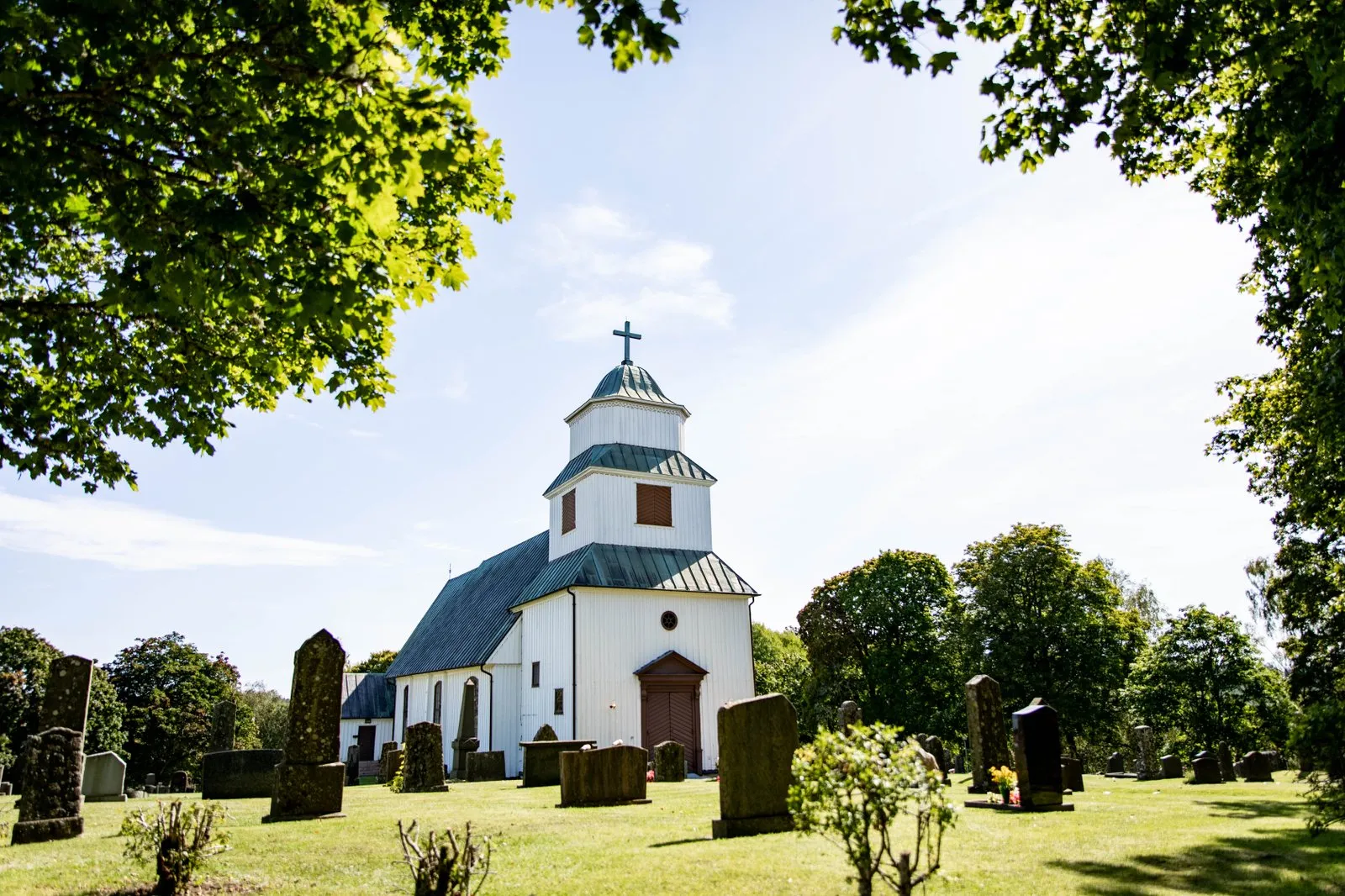
Gunnarp Church – So Much is New These Days!
Traveling from the coast to the inland and the parish of Gunnarp is a pleasure in itself. Taking the smaller roads, you experience how rich and varied the landscape is.
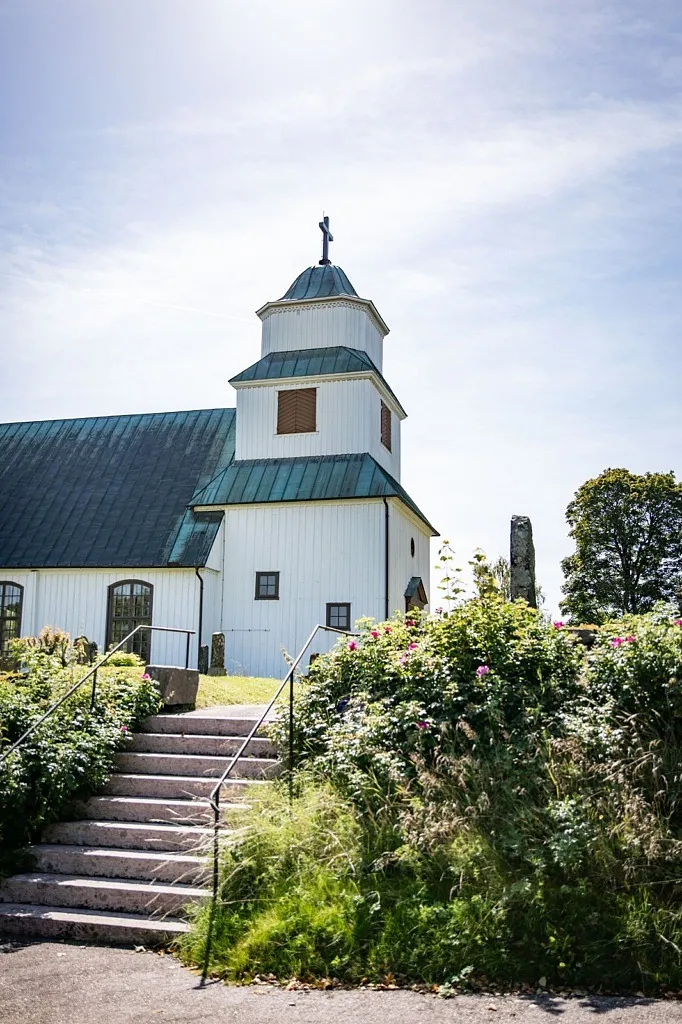
There has probably been a church in Gunnarp since the 1200s. The current one was completed in 1756 and is one of the few wooden churches in Halland. What makes it especially worth seeing are the vibrant paintings by Henrik Andersson Wibeck from Varberg, created in 1782. A tragicomic episode took place at Gunnarp Church in 1692, providing wonderful evidence that people have thought similarly, both then and now!
At the end of the 1600s, an edict was issued on oaths and Sabbath-breaking. This royal decree contained a range of rules and prohibitions regarding conduct. Among other things, it was mandated that a punishment stock be set up at each church. Over time, the stock was used for various minor offenses. Sitting in the stock was a form of shaming, and placing it at the church ensured that all the villagers, gathered weekly for church, could subject the offender to scorn.
Mårten Bengtsson was a farmer from Sotanäs in the parish of Gunnarp. In 1692, the people of Gunnarp had received their stock installed in the churchyard, and this new contraption was not to Mårten’s liking. Everything had been well in the village throughout his life, and, in his eyes, there was no reason to mount this newfangled thing outside God’s house.
On the eighth Sunday after Trinity, there was, as usual, a service at Gunnarp Church. The bells had rung, and the people gathered to go inside. The sexton was standing and looking at the new stock that had just been put in place. Old Mårten approached the sexton and made a bitter comment:
“Our forefathers certainly didn’t have any stock in the churchyard, and things were just as good then as they are now. So much is new these days!” (Sound familiar?)
The sexton replied to Mårten:
“Who can deny the King’s decree?”
“The King isn’t coming to this church, is he?” Mårten retorted.
Mårten then shouted to the townsfolk outside the church:
“Curse those who carried the stock here. Come, let’s throw it in the river!”
Publicly urging the parishioners to throw the stock into the Ätran River was not a smart move. He had thereby encouraged the congregation to disobey a Royal Majesty’s order. This was tantamount to incitement! Naturally, it all led to a trial.
At the court, Mårten was asked to respond. He replied, remorsefully:
“God have mercy on me, a poor sinner. It was in ignorance that I spoke these words.”
Mårten’s employer, Colonel Fugel, had sent his representative Jacob Ellers to help the subordinate farmer. Jacob tried to argue that Mårten was a simple-minded man who hadn’t truly intended the offense as it was perceived, and therefore pleaded for mercy instead of strict justice on Mårten’s behalf.
The proposal to throw the stock into the river proved costly. For this, he was fined 40 marks (10 silver dalers). But that wasn’t the worst. He had also cursed the men who had carried the stock to the churchyard. For this, he was fined an additional 50 silver dalers—a huge sum that he could not possibly pay. The law then prescribed an alternative punishment. Mårten was sentenced to public church penance—and, naturally, as a fitting conclusion, he was also sentenced to sit in the hated stock for four Sundays in a row! What could be more appropriate in this case?