

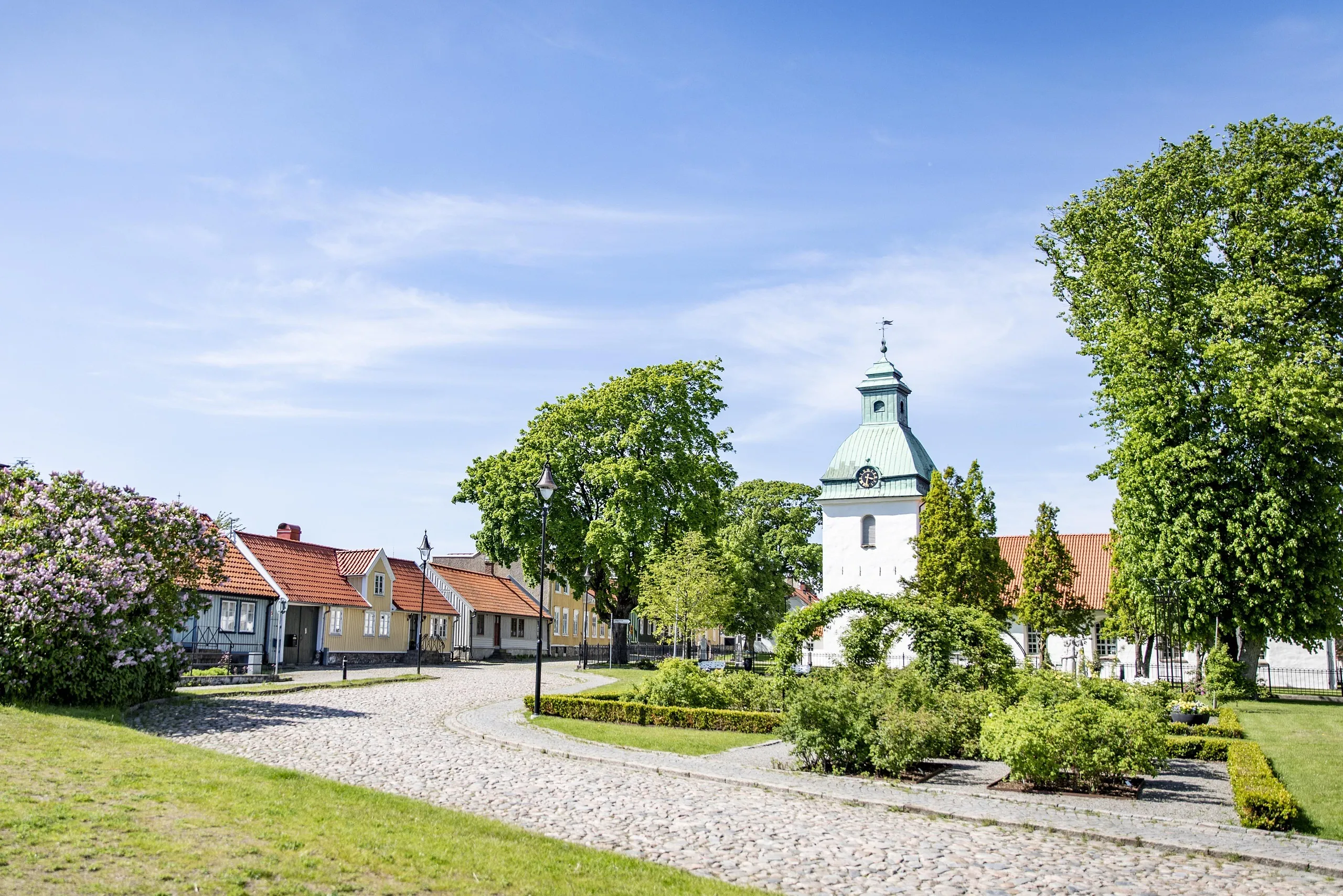
Gamla Stan – A Dispute That Could Have Ended at the Execution Block
Walking through Gamla Stan is like stepping back a couple of hundred years. But the idyll of flowers and well-maintained buildings we see today does not always reflect life in Falkenberg 300 years ago.
We go back to Midsummer’s Day in 1730. Karen Bengtsdotter was not in church, despite the ongoing high mass. Instead, she was in a quarrel with her adult daughter, Helena Lindh.
The town messenger, Johan Nilsson, heard Helena calling her mother “an old whore and thief.” He hurried over to put a stop to this unchristian behavior. Once he arrived, he saw the women pulling each other’s hair, even wielding a broom as a weapon. Caught in the act, they immediately let go of each other and pleaded with the witness not to report them.
It all ended up in court. Helena explained that she had gone into town in the morning to get milk for her children. She had set the milk on a chest in the hall, but then her mother’s cat knocked it over. This was why she got angry. In fact, she hadn’t cursed her mother; it was the cat she had cursed, she tried to excuse herself.
The problem was that the fourth commandment in the Bible was interpreted literally. One was to honor their father and mother. Anyone who struck their parents was to be sentenced to death. It didn’t matter how minor the altercation was—no wounds or bruises were needed for a guilty verdict. It was the symbolic act itself that carried the death penalty.
Helena begged for mercy instead of justice. Her mother also pleaded with the court to spare her daughter’s life. Helena further explained that she had only tried to grab the broom so her mother wouldn’t hit her (which would not have been judged nearly as harshly).
The evidence was inconclusive. According to the witness, Helena had cursed her mother and pulled her hair, but Helena insisted that the words were directed at the cat. The court, therefore, chose to acquit rather than convict. Instead, Helena was sentenced to 14 days in prison for quarreling and cursing the cat on the Sabbath.
Text: Andreas and Anna Karlsson