

Gällared Churchyard – The Blasphemy of 1725
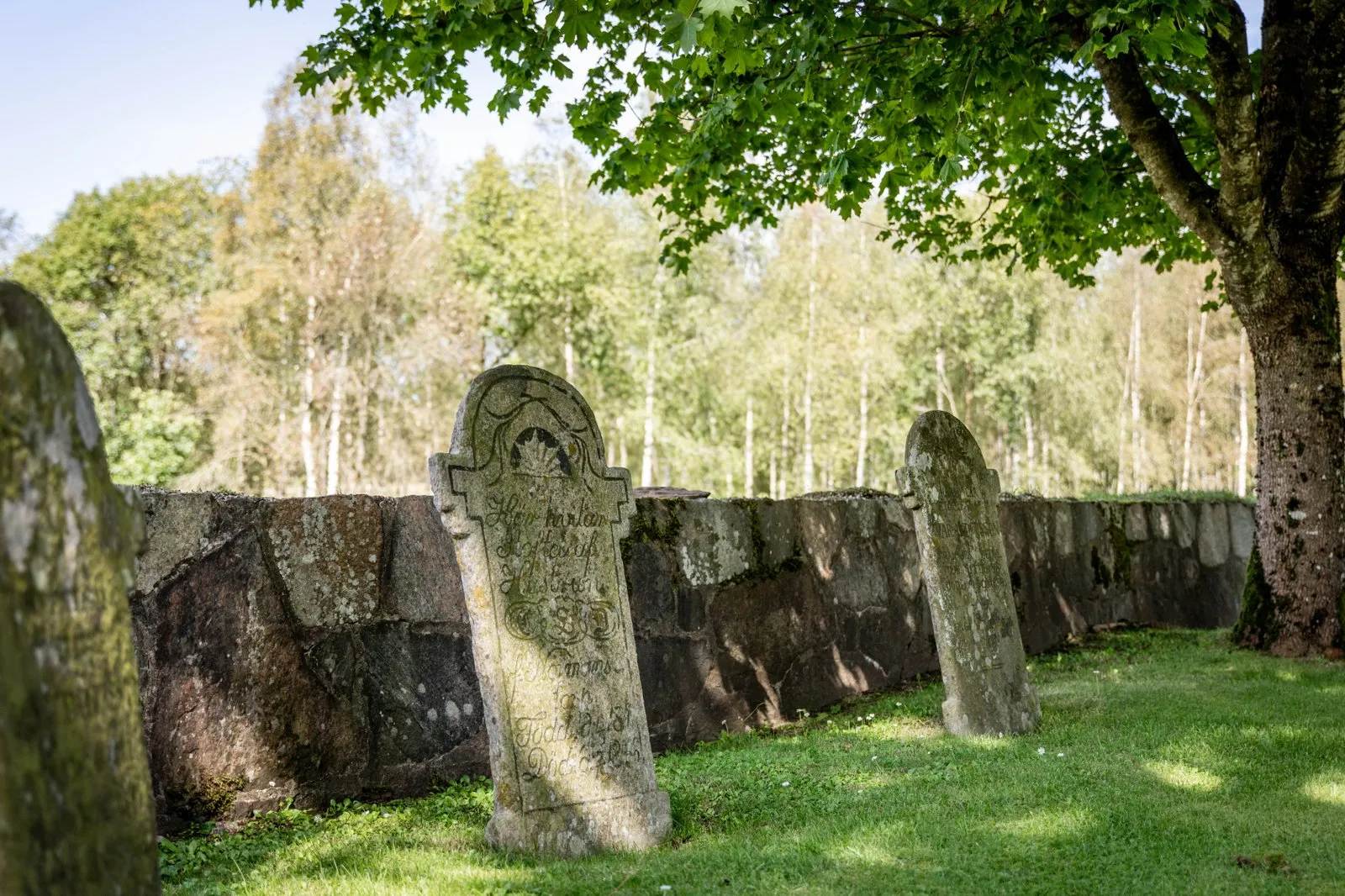
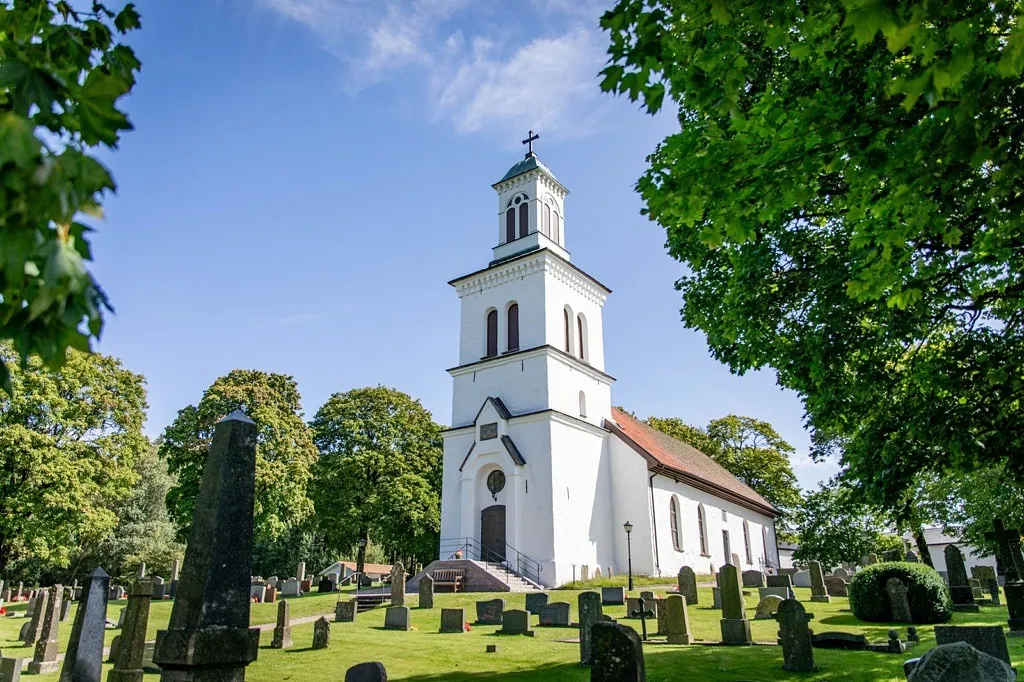
Gällared Churchyard is part of the Ecomuseum – Forest Region. The churchyard is somewhat unique with its large collection of older gravestones, carefully restored so that the inscriptions are still readable. These stones date from the 17th century up to the 19th century.
One Saturday afternoon in the spring of 1725, Herlack Hansson from Skog stood in Gällared churchyard. In his hand, he held a spade. A somber task awaited him; he was to help his neighbors dig a grave. Generations of Gällared residents lay in the soil, awaiting resurrection. It was therefore more or less inevitable to encounter remains. When these bones were exposed, some in the group remarked:
“Good Lord, what a mess it will be when these shall one day come back to life!”
If we are to believe Tore Persson from Norrskog, Herlack couldn’t resist responding to the question:
“In the devil’s name!”
The belief in resurrection was literal. Bones would again be surrounded by flesh—the body would be reincarnated when Judgment Day came. Questioning this fact was a serious blasphemy.
Herlack’s blasphemy reached the ears of the parish priest, Lars Erynander. On February 10, 1726, the case was brought to the Faurås District Court for judgment. A distraught Herlack claimed that he was completely innocent. In fact, it was Tore Persson from Norrskog who had lied about him due to the hatred and enmity between them. Shortly before, the two had gotten into a fight, and through his testimony, Tore was now trying to bring him down, claimed Herlack.
Herlack had an entirely different version of events. His brother, Anders Hansson, had urged him to come with him to Norrskog. However, he had refused, as it was too far to walk. Anders then suggested they could take a shorter route. At that moment, Herlack had exclaimed “in the devil’s name” while turning to the neighbors standing at the other end of the grave, who were discussing the resurrection of the dead. Herlack claimed he had comfortingly said to the men who had uncovered the bones:
“Surely there will be a change with the bones of the dead when they shall one day rise again. They will likely not retain the state they had in the grave.”
Some witnesses were uncertain about what had happened, but Torbjörn from Månagärde was more precise. Right after they had marveled at how human bones could come to life again, he heard Herlack say “in the devil’s name.”
The court was skeptical of Herlack’s explanation. It must have seemed like a strained afterthought, but Herlack would not admit to anything. He claimed it had all been about his reluctance to take a shortcut with his brother, and that the others had misunderstood him.
In its ruling, the Faurås District Court noted that the witnesses had unanimously heard Herlack utter the offensive words. However, several factors spoke in Herlack’s favor. He had never previously expressed any doubt that the dead could expect resurrection. It was also concluded that Herlack was knowledgeable in Christianity, and there was no reason to suspect him of any “damnable heresy.” It was also entirely possible that the witnesses simply had not noticed Herlack talking to his brother. Therefore, he was acquitted of the charges of heresy.
The episode with Herlack shows how sensitive it was to utter words that could in any way be perceived as questioning religion.
What penalty would Herlack have risked if he had been convicted? According to church law, those who spread misleading views and did not correct themselves after serious admonitions were, after due investigation and judgment, to be counted as apostates. This also meant that they would be exiled.
Text: Andreas and Anna Karlsson