Anna and Andreas historical gems

Sixteen non-fiction books, four acclaimed historical novels, numerous awards, and an unending passion for the history of Halland. Few have a better insight into our history than siblings Anna and Andreas Karlsson. On this page, they have listed and written about a whole array of historical gems in Falkenberg—perfect for a day trip tracing the footsteps of the past!

Steninge Coast – an Enchanting Nature Reserve with a Dramatic History

Steninge Coast – an Enchanting Nature Reserve with a Dramatic History

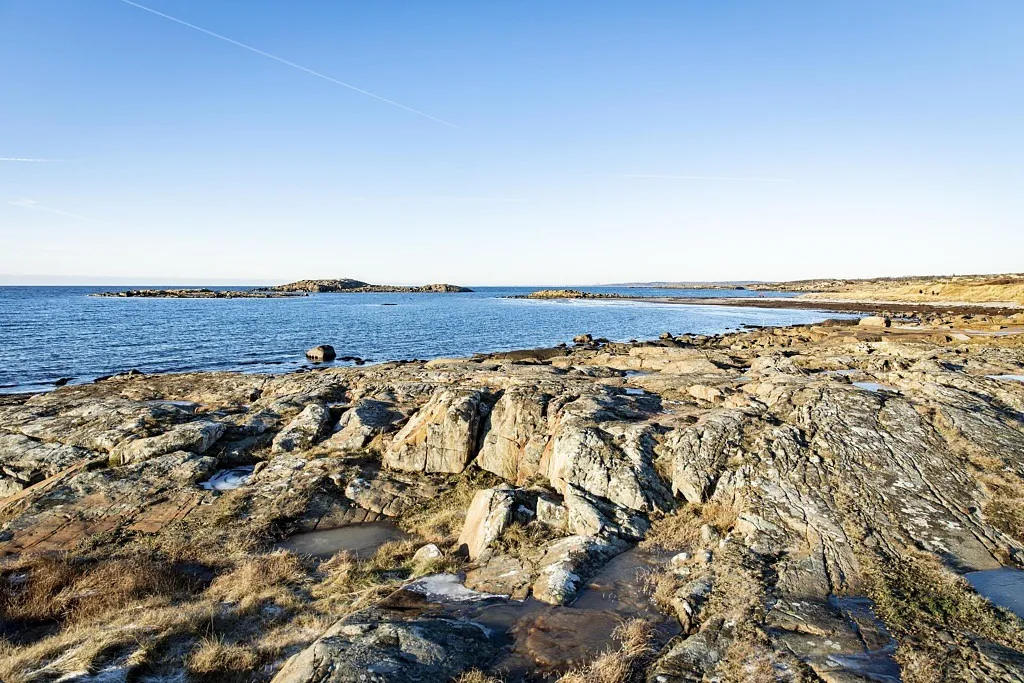
Steninge Coast is the new name for the former nature reserves Stensjöstrand and Steninge. Here, you’ll find coastal heathlands with rocky beaches, sand dunes, shingle fields, cliffs, and small patches of deciduous trees. Icelandic horses and grazing sheep roam the pastures. On a warm evening, you can pick your own cliff and enjoy a magical sunset. In autumn, you can wander the windswept beaches and feel the salt spray on your face. The nature reserve has its charm in every season. The Halland coast may be peaceful and idyllic, but it also harbors a dramatic history. Let us journey back to October 1675. A month earlier, Denmark had declared war on Sweden, in what would later be known as the Scanian War. The question was whether Halland would remain a Swedish province or if the Hallanders would once again be under Danish rule after the war. When soldiers and boats were spotted from afar, it was unclear whether they were Swedish or Danish. Guard duty could mean the difference between life and death. At Stensjö, men from the area were hastily posted to watch. However, putting untrained farmers on this duty could be a challenge, traces of which we can see in the court records. On October 5, 1675, the sheriff Sven Persson in Lynga read out the names of a long list of men who were to stand trial at the Årstad district court. All these men had been posted as guards at Stensjö. However, discipline among the farmers was not the best. We can suspect they relied on alcohol to stay lively and awake. In the middle of the night, they started shooting and shouting. This led General and his men at Stensjö Manor to first believe the Danes had arrived! The General sent out men to admonish the guards to “keep quiet,” but despite this, the men continued to make noise and fire their guns. The summoned farmers vaguely responded that they would answer the charges at the next court session. This never happened, and the case faded away. Text: Andreas and Anna Karlsson
Gällared Churchyard – The Blasphemy of 1725

Gällared Churchyard – The Blasphemy of 1725

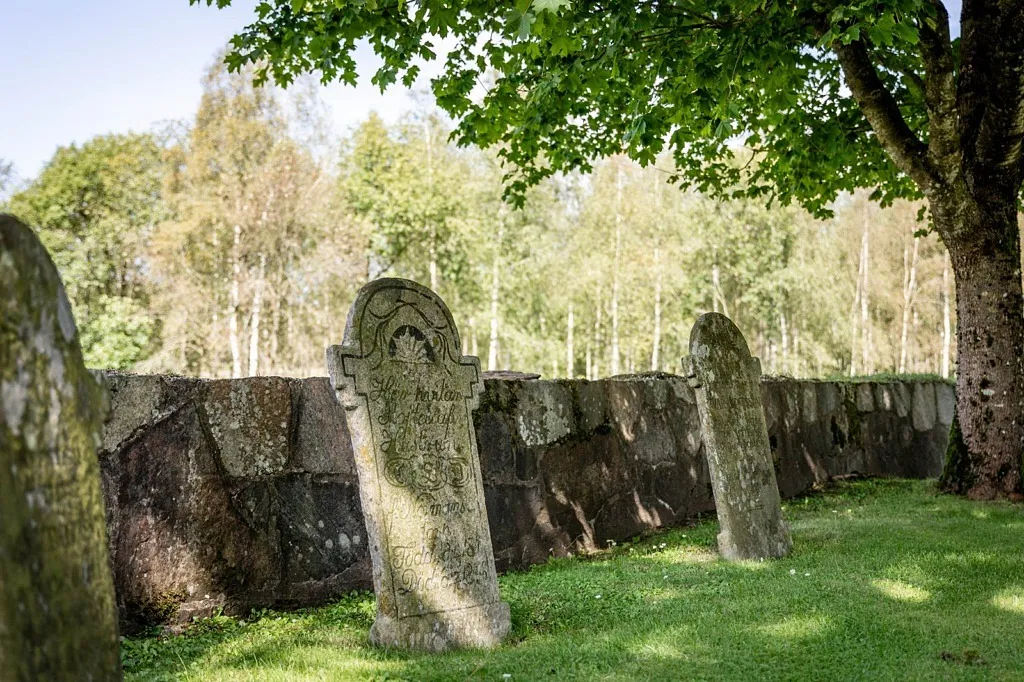
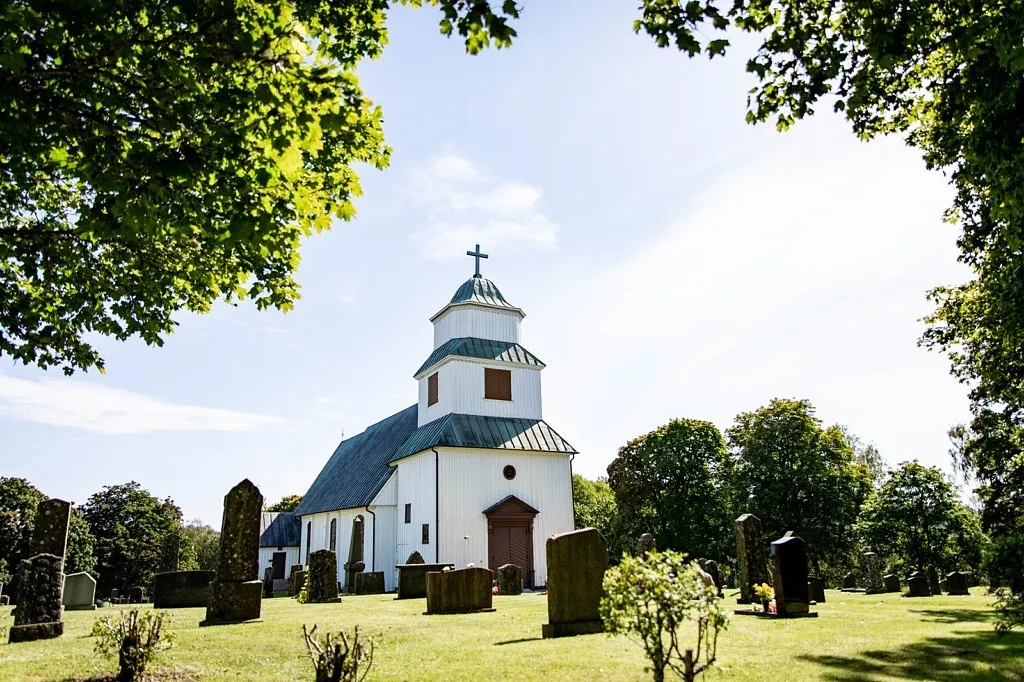
Gällared Churchyard is part of the Ecomuseum – Forest Region. The churchyard is somewhat unique with its large collection of older gravestones, carefully restored so that the inscriptions are still readable. These stones date from the 17th century up to the 19th century. One Saturday afternoon in the spring of 1725, Herlack Hansson from Skog stood in Gällared churchyard. In his hand, he held a spade. A somber task awaited him; he was to help his neighbors dig a grave. Generations of Gällared residents lay in the soil, awaiting resurrection. It was therefore more or less inevitable to encounter remains. When these bones were exposed, some in the group remarked: "Good Lord, what a mess it will be when these shall one day come back to life!" If we are to believe Tore Persson from Norrskog, Herlack couldn't resist responding to the question: “In the devil’s name!” The belief in resurrection was literal. Bones would again be surrounded by flesh—the body would be reincarnated when Judgment Day came. Questioning this fact was a serious blasphemy. Herlack's blasphemy reached the ears of the parish priest, Lars Erynander. On February 10, 1726, the case was brought to the Faurås District Court for judgment. A distraught Herlack claimed that he was completely innocent. In fact, it was Tore Persson from Norrskog who had lied about him due to the hatred and enmity between them. Shortly before, the two had gotten into a fight, and through his testimony, Tore was now trying to bring him down, claimed Herlack. Herlack had an entirely different version of events. His brother, Anders Hansson, had urged him to come with him to Norrskog. However, he had refused, as it was too far to walk. Anders then suggested they could take a shorter route. At that moment, Herlack had exclaimed “in the devil’s name” while turning to the neighbors standing at the other end of the grave, who were discussing the resurrection of the dead. Herlack claimed he had comfortingly said to the men who had uncovered the bones: “Surely there will be a change with the bones of the dead when they shall one day rise again. They will likely not retain the state they had in the grave.” Some witnesses were uncertain about what had happened, but Torbjörn from Månagärde was more precise. Right after they had marveled at how human bones could come to life again, he heard Herlack say “in the devil’s name.” The court was skeptical of Herlack's explanation. It must have seemed like a strained afterthought, but Herlack would not admit to anything. He claimed it had all been about his reluctance to take a shortcut with his brother, and that the others had misunderstood him. In its ruling, the Faurås District Court noted that the witnesses had unanimously heard Herlack utter the offensive words. However, several factors spoke in Herlack's favor. He had never previously expressed any doubt that the dead could expect resurrection. It was also concluded that Herlack was knowledgeable in Christianity, and there was no reason to suspect him of any “damnable heresy.” It was also entirely possible that the witnesses simply had not noticed Herlack talking to his brother. Therefore, he was acquitted of the charges of heresy. The episode with Herlack shows how sensitive it was to utter words that could in any way be perceived as questioning religion. What penalty would Herlack have risked if he had been convicted? According to church law, those who spread misleading views and did not correct themselves after serious admonitions were, after due investigation and judgment, to be counted as apostates. This also meant that they would be exiled. Text: Andreas and Anna Karlsson
Gamla Stan – A Dispute That Could Have Ended at the Execution Block

Gamla Stan – A Dispute That Could Have Ended at the Execution Block

Walking through Gamla Stan is like stepping back a couple of hundred years. But the idyll of flowers and well-maintained buildings we see today does not always reflect life in Falkenberg 300 years ago. We go back to Midsummer's Day in 1730. Karen Bengtsdotter was not in church, despite the ongoing high mass. Instead, she was in a quarrel with her adult daughter, Helena Lindh. The town messenger, Johan Nilsson, heard Helena calling her mother “an old whore and thief.” He hurried over to put a stop to this unchristian behavior. Once he arrived, he saw the women pulling each other's hair, even wielding a broom as a weapon. Caught in the act, they immediately let go of each other and pleaded with the witness not to report them. It all ended up in court. Helena explained that she had gone into town in the morning to get milk for her children. She had set the milk on a chest in the hall, but then her mother’s cat knocked it over. This was why she got angry. In fact, she hadn’t cursed her mother; it was the cat she had cursed, she tried to excuse herself. The problem was that the fourth commandment in the Bible was interpreted literally. One was to honor their father and mother. Anyone who struck their parents was to be sentenced to death. It didn’t matter how minor the altercation was—no wounds or bruises were needed for a guilty verdict. It was the symbolic act itself that carried the death penalty. Helena begged for mercy instead of justice. Her mother also pleaded with the court to spare her daughter’s life. Helena further explained that she had only tried to grab the broom so her mother wouldn’t hit her (which would not have been judged nearly as harshly). The evidence was inconclusive. According to the witness, Helena had cursed her mother and pulled her hair, but Helena insisted that the words were directed at the cat. The court, therefore, chose to acquit rather than convict. Instead, Helena was sentenced to 14 days in prison for quarreling and cursing the cat on the Sabbath. Text: Andreas and Anna Karlsson
Sjönevad’s Gästis – Drunkenness in the Year 1735

Sjönevad’s Gästis – Drunkenness in the Year 1735

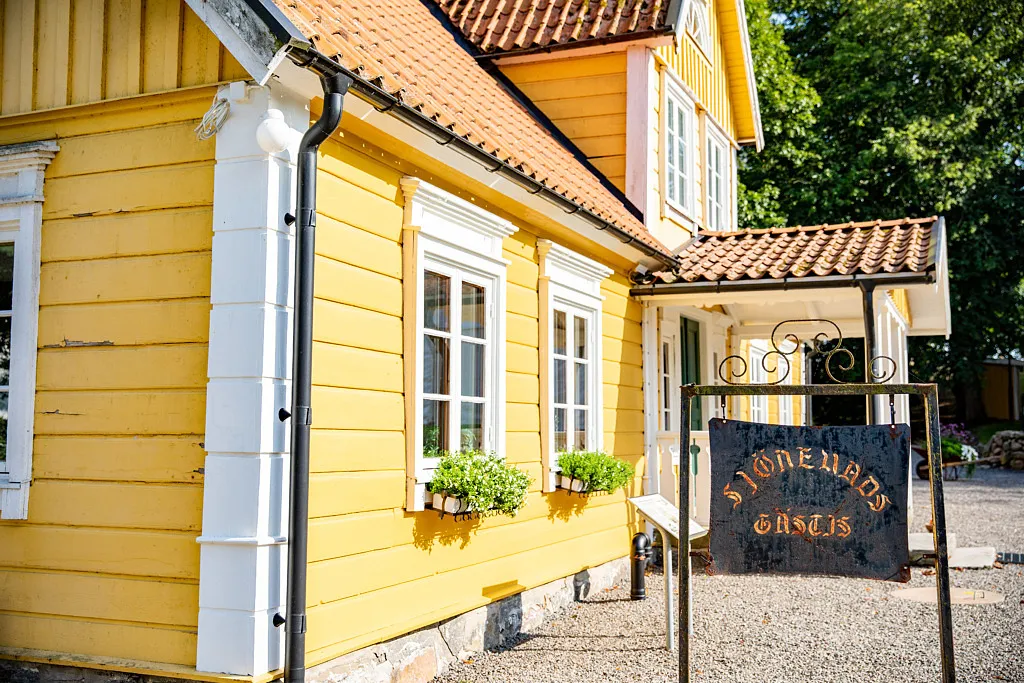
At Sjönevad’s Gästis, travelers have been served food and drink for many hundreds of years. The inn is located next to Lake Sjönevad, where you can swim and paddle. In summer, an annual folk music gathering is held, as well as the large market that attracts up to 50,000 visitors. The market has been held annually in Sjönevad since the early 1800s and recently celebrated its 200th anniversary. But now, let’s go back to the inn and the year 1735—specifically, the fourth day of Pentecost. On Sabbath days, it was important to behave in a Christian and godly manner. Filling oneself with beer and schnapps after attending church was out of the question. We find many court cases where individuals were accused of being intoxicated in church, but it is rare to come across cases where someone is prosecuted solely for being drunk on a holiday. There was previously no general ban on drunkenness on weekdays. As long as one did not commit a crime or behave too badly, they were safe from the law. It was only in 1733 that the law was tightened. Since the normal drink at meals was beer, and a shot or two was believed to be good for health, almost everyone was likely a bit tipsy on a daily basis. Anders Persson from Yttre Mosilt did not observe the Sabbath. Instead, he sat at the inn, downing strong drinks. Unfortunately, he had one glass too many. In September, district sheriff Johan Petter Sevelius summoned Anders for having “overindulged in drinking and drunkenness.” Anders admitted that he had indeed been a little tipsy but firmly denied that he had drunk himself intoxicated in any way. The prosecution had strong evidence, as the incident took place at Sjönevad’s inn among other guests. Three independent witnesses testified that Anders staggered and had difficulty mounting his horse. It was obvious he was intoxicated. Anders brushed off the accusations, claiming he was no more drunk than any of his companions. The court stated in its resolution that there was no doubt about Anders’ condition, as three consistent witnesses had observed his inebriation. Referring to the royal decree from April 17, 1733, Anders was fined five silver dalers. If he could not afford the fine, he would face four days in prison. This new law must have been taken lightly by many. Before 1733, drunkenness as such was not prosecuted by the justice system. It was only when the drunkard committed another offense—such as misbehaving in church, fighting, or cursing at someone—that they were taken to court. During brawls or quarrels, people would often “excuse” themselves by claiming they had been drunk. The case from Sjönevad is not unique, but it is rare. Perhaps it was precisely because Anders Persson was drunk on a Sunday that the district sheriff wanted to test the new law. Text: Andreas and Anna Karlsson
Gunnarp Church – So Much is New These Days!

Gunnarp Church – So Much is New These Days!

Traveling from the coast to the inland and the parish of Gunnarp is a pleasure in itself. Taking the smaller roads, you experience how rich and varied the landscape is. There has probably been a church in Gunnarp since the 1200s. The current one was completed in 1756 and is one of the few wooden churches in Halland. What makes it especially worth seeing are the vibrant paintings by Henrik Andersson Wibeck from Varberg, created in 1782. A tragicomic episode took place at Gunnarp Church in 1692, providing wonderful evidence that people have thought similarly, both then and now! At the end of the 1600s, an edict was issued on oaths and Sabbath-breaking. This royal decree contained a range of rules and prohibitions regarding conduct. Among other things, it was mandated that a punishment stock be set up at each church. Over time, the stock was used for various minor offenses. Sitting in the stock was a form of shaming, and placing it at the church ensured that all the villagers, gathered weekly for church, could subject the offender to scorn. Mårten Bengtsson was a farmer from Sotanäs in the parish of Gunnarp. In 1692, the people of Gunnarp had received their stock installed in the churchyard, and this new contraption was not to Mårten’s liking. Everything had been well in the village throughout his life, and, in his eyes, there was no reason to mount this newfangled thing outside God’s house. On the eighth Sunday after Trinity, there was, as usual, a service at Gunnarp Church. The bells had rung, and the people gathered to go inside. The sexton was standing and looking at the new stock that had just been put in place. Old Mårten approached the sexton and made a bitter comment: “Our forefathers certainly didn’t have any stock in the churchyard, and things were just as good then as they are now. So much is new these days!” (Sound familiar?) The sexton replied to Mårten: “Who can deny the King’s decree?” “The King isn’t coming to this church, is he?” Mårten retorted. Mårten then shouted to the townsfolk outside the church: “Curse those who carried the stock here. Come, let’s throw it in the river!” Publicly urging the parishioners to throw the stock into the Ätran River was not a smart move. He had thereby encouraged the congregation to disobey a Royal Majesty’s order. This was tantamount to incitement! Naturally, it all led to a trial. At the court, Mårten was asked to respond. He replied, remorsefully: “God have mercy on me, a poor sinner. It was in ignorance that I spoke these words.” Mårten’s employer, Colonel Fugel, had sent his representative Jacob Ellers to help the subordinate farmer. Jacob tried to argue that Mårten was a simple-minded man who hadn’t truly intended the offense as it was perceived, and therefore pleaded for mercy instead of strict justice on Mårten’s behalf. The proposal to throw the stock into the river proved costly. For this, he was fined 40 marks (10 silver dalers). But that wasn’t the worst. He had also cursed the men who had carried the stock to the churchyard. For this, he was fined an additional 50 silver dalers—a huge sum that he could not possibly pay. The law then prescribed an alternative punishment. Mårten was sentenced to public church penance—and, naturally, as a fitting conclusion, he was also sentenced to sit in the hated stock for four Sundays in a row! What could be more appropriate in this case?
Funtaliden – Disgraceful Behavior

Funtaliden – Disgraceful Behavior

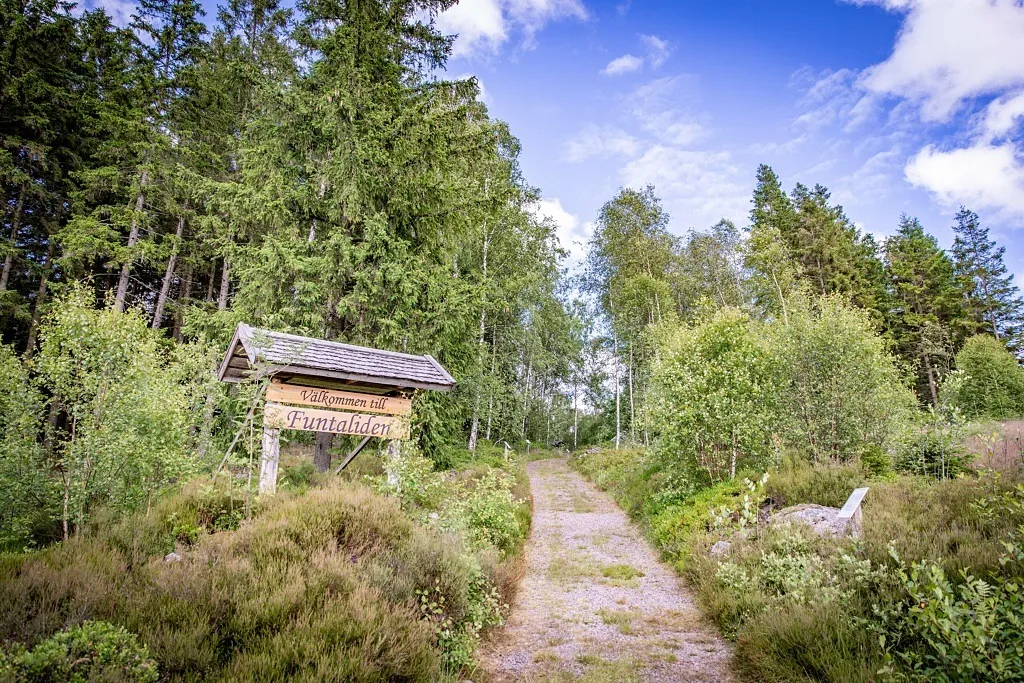
In 1908, an unexpected discovery was made in the parish of Fagered. In the fields not far from the community of Fagered, a number of unfinished baptismal font blanks were found! These fonts, called the Fagered Fonts, are believed to date from the 13th century. After the discovery, the fonts were taken to a museum in Lund, where they were stored for nearly 100 years. Now, two of the pieces have been returned to their original location, not far from Fagered. Funtaliden has become a peaceful open-air museum where you can view the unfinished font blanks. There is a short walking trail with signs illustrating the labor-intensive process of carving fonts. The placed benches make Funtaliden a perfect spot for a picnic. But now let us tell you about events in the lands around Fagered over 300 years ago. Autumn 1722 was arriving. Two weeks before Michaelmas, Erik Svensson from Bösteshult was out in the fields when he saw his pastor, the colorful Nils Bagge. The priest was busy driving pigs out of his field. The animals seemed to belong to Per Nilsson of Tofta. The priest handled the pigs roughly, sending his bandog on them and striking them “cruelly” with a stick he held in his hand. Two of the pigs managed to escape relatively unharmed, but the third fell into the grip of the priest’s dog. The bandog injured the pig so severely that it remained on the ground. The uninjured animals were driven toward the priest's own stable. Why did the pastor attack Per’s pigs? They had strayed into the priest’s field, and the pastor did not want them there. They could ruin his crops! According to witnesses, however, there was no reason for the priest to be so upset. He had harvested all his grain the day before, so the pigs likely posed no real threat. It was more about the principle of keeping the animals off his land. On October 16, 1722, Per summoned his priest to the Faurås District Court. The pig had died, and he now accused Nils Bagge of killing the animal. He sought justice and compensation for what had happened. At first, the priest denied all accusations, but Per had come prepared. He called Erik Svensson from Bösteshult as a witness. Erik recounted everything he had seen. The priest found it increasingly difficult to evade the claims. The court scribe noted in the protocol that Nils Bagge “finally” admitted that Erik’s testimony was accurate. However, he argued that Per’s pigs had been entering his field all summer, causing significant damage. The priest requested a delay until the next court session so he could call witnesses, claiming he had been summoned at such short notice that he hadn’t had time to prepare. The court did not accept the priest’s excuses. Referring to Chapter 44 of the Criminal Code, they ruled that it was reasonable for Per Nilsson to receive full compensation for the pig that had been killed. The animal was valued at three silver dalers. Additionally, the priest was fined three marks for his violent behavior and was also required to cover Per’s court costs. The priest of Fagered was a man who frequently found himself in the hot seat—sometimes as the accused, sometimes as the plaintiff! Text: Andreas and Anna Karlsson
Åkulla Beech Forests – Tree Thieves in the Year 1741

Åkulla Beech Forests – Tree Thieves in the Year 1741

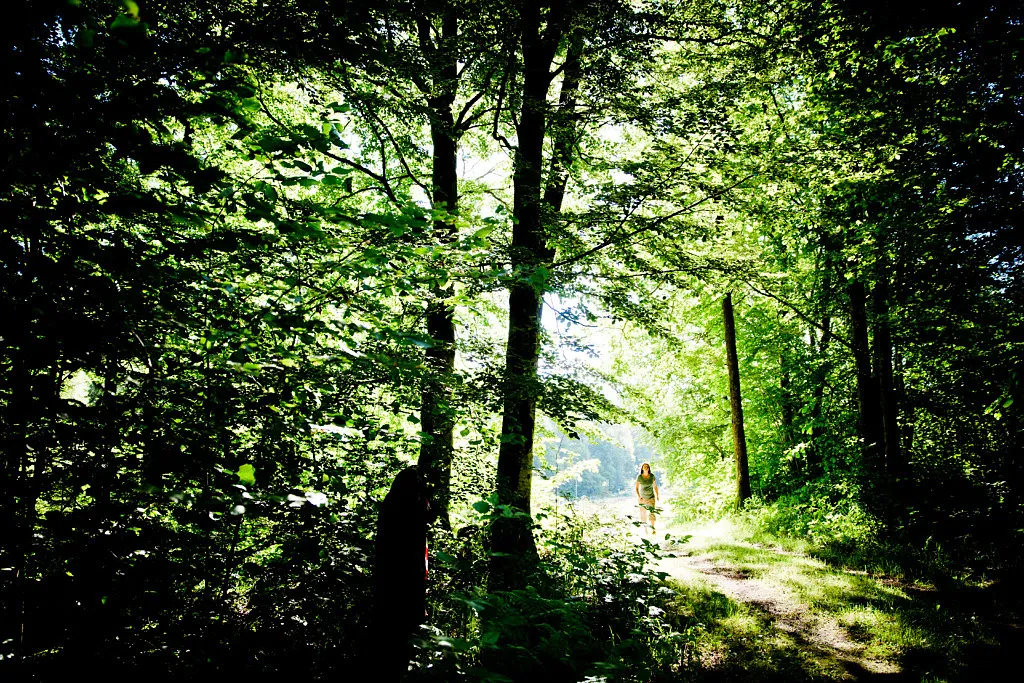
On the border between Falkenberg and Varberg lies Åkulla Beech Forests. It is a vast natural area with about twenty lakes and several nature reserves. Here, there are hiking trails suitable for the whole family—anything from a stroll with a pram to a challenging run through the majestic beech forests. There are opportunities for fishing, paddling, and sightseeing. In winter, there are artificial snow trails for skiing. Wood and timber have always been valuable resources. Farmers needed firewood, fencing timber, and logs for building houses. As the population grew, so did the demand. At the same time, the Crown needed high-quality timber, particularly for shipbuilding. The navy required the best timber available. To secure the supply of ship timber, all oaks were designated as the King's trees—even if they grew on farmers' land. Anyone who cut down an oak on their land was stealing from the king! For repeated offenses, the punishment was death. Even into the 1810s, the penalty for unlawfully cutting or damaging an oak was a heavy fine or a month in prison on bread and water When we go back to the year 1741 and two men who chopped wood in Åkulla, it was certainly not with any permits in hand... On November 10, Olof Andersson and Sven Andersson from Åkulla were summoned to the Himle district court. They stood accused of cutting down an oak and a beech on the property. In the absence of the prosecutor, the case was presented by the forester, Torsten Stenström. Sven and Olof could not deny the charge. They could offer little defense beyond the claim that the trees were essential to them. Their defense did not suffice. The court sentenced the men to fines of two times nine silver dalers. In addition, they were ordered to pay damages to the Crown, 12 öre for the oak and 16 öre for the beech. Sven and Olof faced another penalty. To replace the felled trees, they were to plant two young saplings—a beech and an oak. They were to tend to both trees until they grew large enough to be safe from grazing livestock. This last punishment may sound symbolic. But if you take a rest under a gnarled old oak after a run in Åkulla, it could very well be the very tree that Sven and Olof were ordered to plant in the fall of 1741! Text: Andreas and Anna Karlsson
Berte – Museum and 17th-Century Dispute

Berte – Museum and 17th-Century Dispute

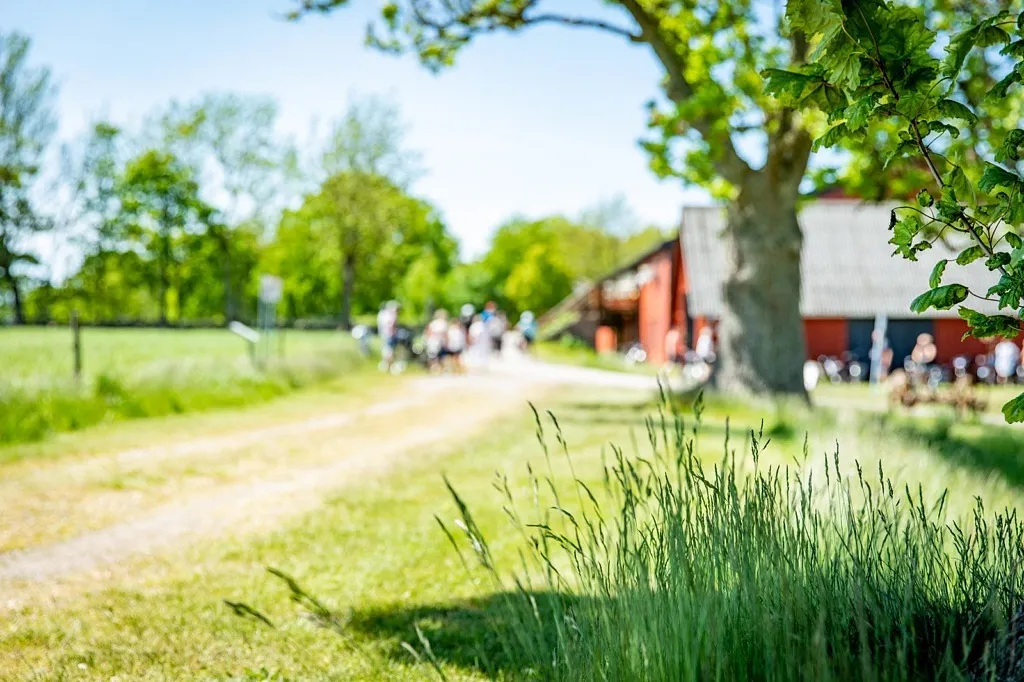
The village of Berte in the parish of Slöinge is best known for its milling industry—a miller tradition documented as far back as the 1500s. Berte Museum, which depicts “Life in the Countryside,” is a noteworthy attraction with many cultural and historical artifacts from the area. But through the archives, we can also get acquainted with some of Berte’s residents in the 1600s. Easter 1657 had just concluded. As the people of Slöinge parish were meant to rejoice in the resurrection of Jesus, it instead became a time of sorrow for Anders Torsson in Berte. A voice had gone silent in the cottage; one of his sons had departed this life. Two of the guests at the customary funeral ale were Nils Degen (the sexton) from Eftra and Lars Andersson from Berte. Nils and Lars couldn’t keep the peace during the mourning. Anders approached the sexton and said: “Damn you if you won’t do as I say.” Nils replied: “Go ahead, damn me.” The exchange repeated once more before they shook hands and reconciled. The two went outside for a bit, then came back and sat across from each other. Lars then insulted the sexton: “You’re a whore-chaser!” The men rushed outside the cottage again, now resorting to fists. In the scuffle, the sexton’s hat fell off. Lars spotted it, grabbed the hat, and couldn’t resist the urge to toss it into the river. Jon from Slöinge was quick, however, and managed to retrieve it from the water before it floated too far away. The brawl escalated, and soon knives were drawn. Lars was severely stabbed but survived, and it’s due to the knife fight and the subsequent trial that this episode has been preserved for posterity. It wasn’t just the attempted murder that was under scrutiny. One of the most common charges was defamation, and being accused of being a “whore-chaser” was, of course, a serious insult. Through the court records, we see that neither Nils Degen nor Lars Andersson were always exemplary citizens. Shortly after this episode, the sexton became embroiled in a paternity dispute in which he was accused of fathering an illegitimate child. (Perhaps there was a logical reason why he was called a “whore-chaser.”) Text: Andreas and Anna Karlsson
Hjuleberg – Rhododendrons and Witchcraft

Hjuleberg – Rhododendrons and Witchcraft

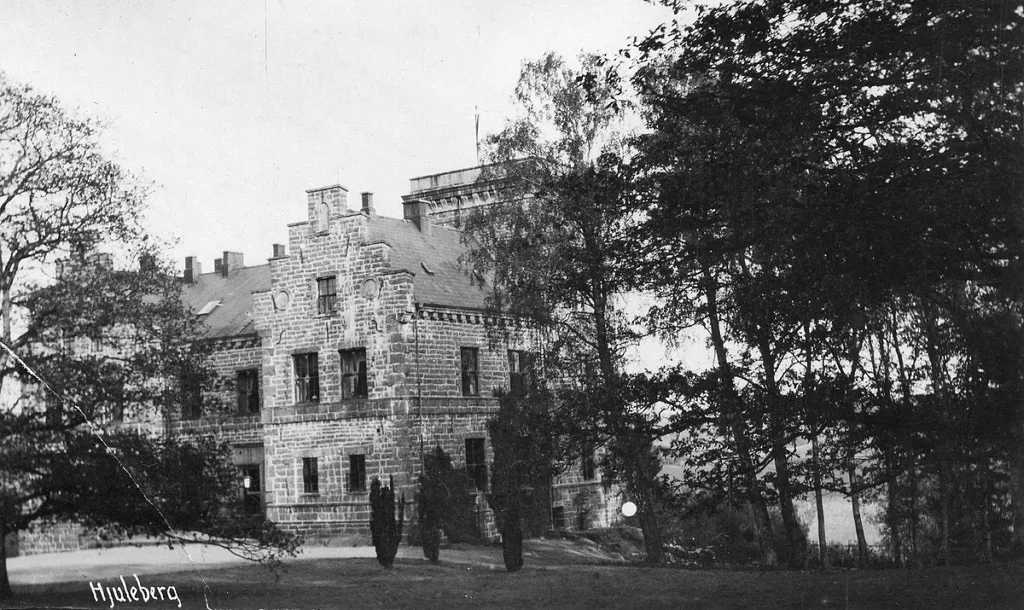
Hjuleberg estate in the parish of Abild is today associated with the enormous rhododendron bushes in its park. One day a year, the estate is open to the public to admire the floral splendor. The main building we see today dates from 1878, but the estate has been known since 1370. Halland’s first governor, Bengt Lilliehöök, bought the property in 1662, and Hjuleberg then became the main estate for the family for many generations. When Bengt died in 1665, his wife, Anna Ekeblad, took over as owner. We will return to this remarkable woman shortly. Let’s go back to 1672, a time when witchcraft and superstition held the population in an iron grip. The devil was seen as a physical person. This tailed creature with a fiery maw could lurk anywhere, ready to sink its claws into people. Both men and women could make pacts with Satan, and all such acts were, of course, punishable by death. Milk, butter, cow-theft, and bewitched livestock were constant themes in the world of witchcraft. With magical verses or rituals, wicked women could cast illnesses on neighbors’ livestock or prevent their crops from growing. When malicious rumors of witchcraft arose, they could be difficult to dispel. And harmful gossip could become dangerous for the accused, so it was important to suppress such talk. Inger Persdotter and her husband, Olof Månsson, from Bössegård, were farmers under Lady Anna Ekeblad of Hjuleberg. Inger felt she had been deeply wronged, and on August 10, 1672, she went to Lady Ekeblad to voice her complaint. Inger had been “spoken of and rumored” to be involved in superstitions. The gossip had been spread by her neighbor, Malin Jensdotter. Around nine years earlier, Inger had borrowed a butter churn from Malin. According to Malin, after Inger had used the churn, she had supposedly smeared it with “witch’s butter.” Malin claimed that she got the churn back the same day, but there was witch’s butter at the bottom. Using a wood chip, she scraped off the yellow substance and threw it into the fire to get rid of it. Witch’s butter is a type of slime mold that grows on rotting wood and stumps, forming a white or yellow mass. In folklore, it was believed that witches used a creature called a bjäran or “witch’s hare” to steal milk from neighbors' cows. The bjäran would sometimes spill a bit of milk in the forest, which was then called witch’s butter. Smearing witch’s butter in someone’s churn could only mean involvement in sorcery. Being a tenant farmer under a noble estate might not always have been easy, but in some cases, it had its advantages. If treated unfairly, one had a powerful man or woman to speak on one’s behalf, and Lady Ekeblad summoned everyone involved to court. In court, Malin could not prove her accusations. She had no witnesses who could testify to what had actually been at the bottom of the butter churn. The charges were based on very flimsy grounds. Malin had no choice but to retract her statements. She declared that she could say nothing else but that Inger was an honest woman in every respect. She asked to reconcile with her neighbor, which Inger agreed to. Inger had acted exactly as one should when malicious rumors threatened to damage one’s reputation. A strong counteraction at court was an effective way to silence loose talk. Remaining silent and hoping the gossip would die down was rarely the right approach. Through court records, we can gain many insights into the daily life around Hjuleberg and its tenant farmers. In February 1677, a dramatic episode appears. The Danes had raided the area, and Hjuleberg had not escaped looting. Lady Ekeblad appealed to the district court, asking that any farmers who had come into possession of items belonging to the estate should immediately return them. Otherwise, they would be charged with theft. Anna Ekeblad lived until 1685, and her coffin still rests in the Lilliehöök family crypt in Abild Church. The crypt is not open to the public, but her coat of arms can be seen on the church’s outer choir wall. Text: Andreas and Anna Karlsson
Särestad Burial Ground – Sabbath Violations

Särestad Burial Ground – Sabbath Violations

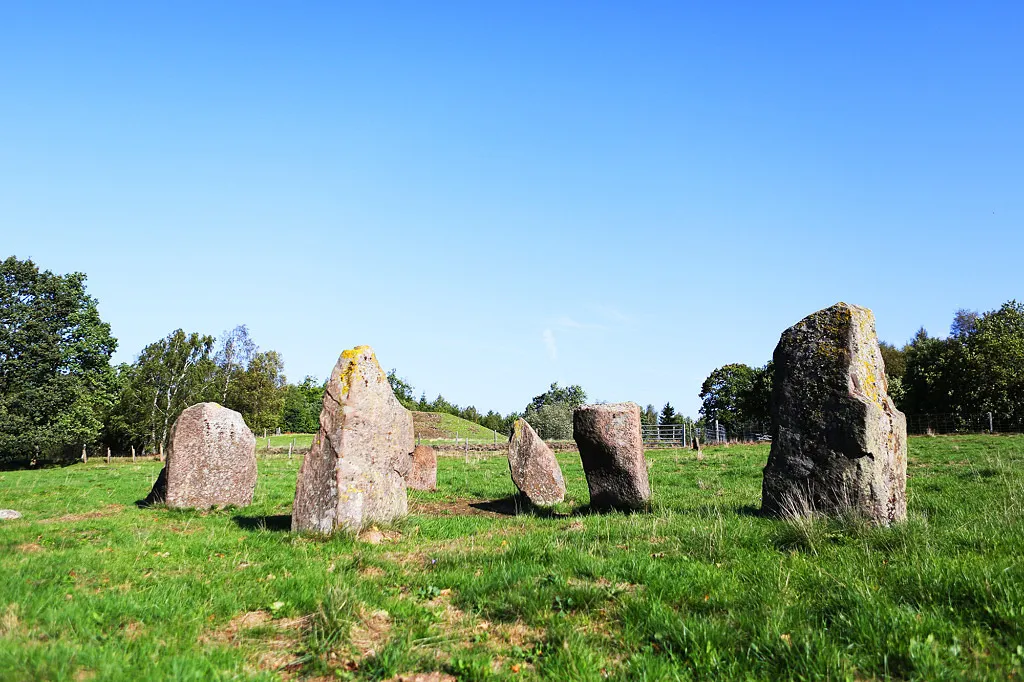
Around Särestad, there are burial grounds from the Bronze and Iron Ages. In the lush pastures, you’ll find a northern area with standing stones and a southern part with five large stone settings. Across the road lies a large burial mound from the Bronze Age, six meters high and 35 meters in diameter. According to the folktale of Hagbard and Signe, Hagbard was buried here after hanging from Hagbard’s gallows located two kilometers further south. Visiting the site at dawn and dusk creates an enchanting atmosphere. We leave prehistoric times and move to 1695. It was harvest season, and the farmers of Särestad were busy gathering the hay. After the harvest, it was customary for the harvesters to be treated to a celebration called slåtteröl, or “harvest ale.” On this occasion, the widow Elin Svensdotter in Särestad hosted the gathering. However, things didn’t go smoothly for Bengt Andersson of Särestad. Unfortunately, he had a few too many drinks, which left him unable to attend Sunday’s church service. Bengt was brought to trial for missing church. Lying his way out of the situation wasn’t easy, but Bengt made a valiant attempt. He claimed that it wasn’t the drink that kept him home but rather that he had “pains in his body.” This excuse was doomed to fail. The sheriff himself had knocked on Bengt’s door after the service, finding Bengt just getting out of bed. Groggily, he explained to the sheriff that he “had drunk a little during the night.” Bengt was sentenced to sit in the stocks outside the church for two Sundays in a row, and for his defiant attitude at court, he was also fined! Text: Andreas and Anna Karlsson