Popular spots

Go exploring along the lakes, the coastline or the Ätran river’s winding path through the mountains and forests and you’ll soon find some of Falkenberg’s most popular spots. Expect breathtakingly beautiful nature, peaceful or unexpectedly thrilling. The best part about these popular spots is that they can be visited all year round.

Bastuholmen

Bastuholmen

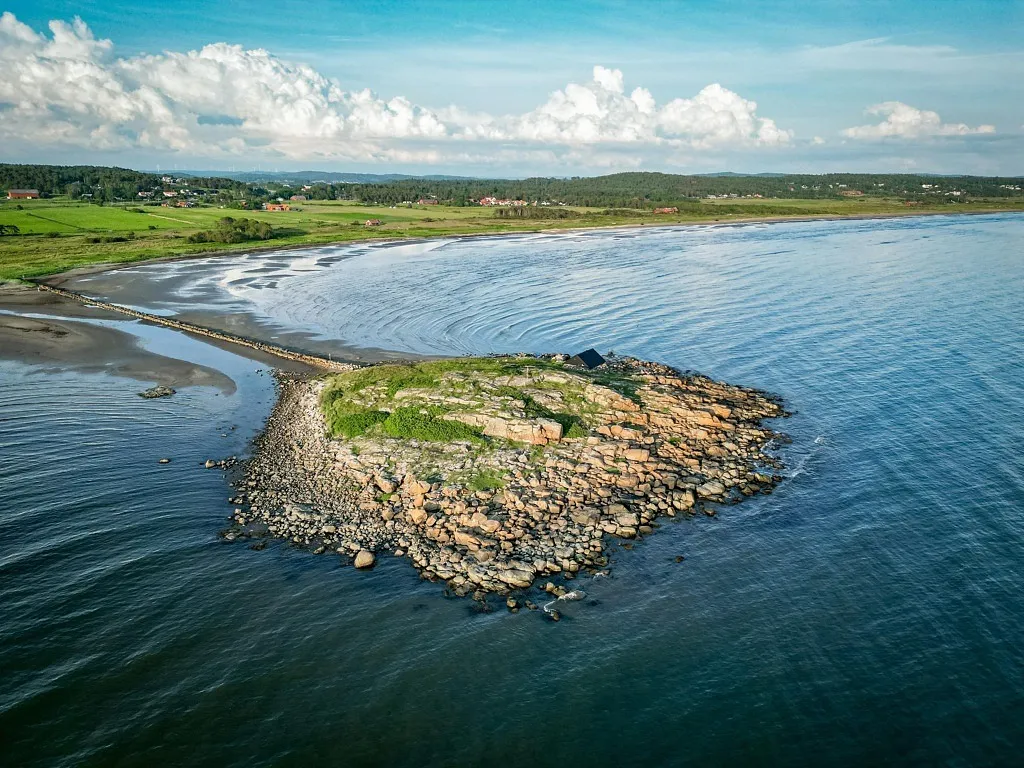
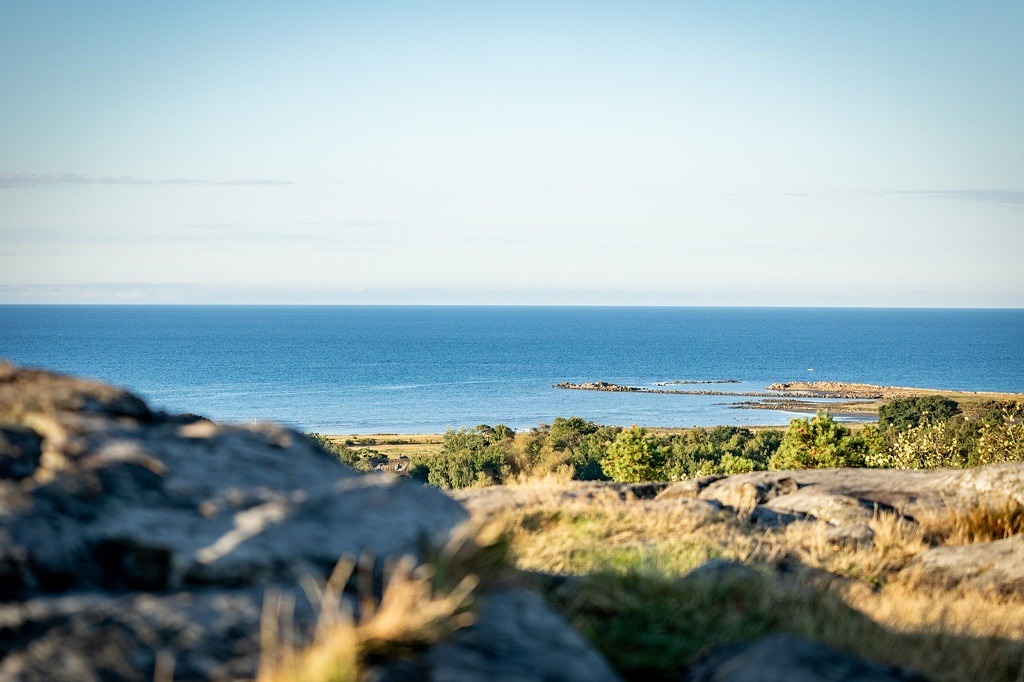
Head south from Skrea Strand. First pass beautiful Näset with its rocky excursion sites that stretch out into the Kattegat. Then the small family-friendly beach strip at Hansagård. From here, Bastuholmen is hard to miss, where it characteristically creates the beautiful silhouette of Hansagård and Ringsegård beaches against the sea. The island of Bastuholmen is connected to land via a long stone pier, perfect for crab fishing. When the water is high, the pier is the only way to get out to the island. A secluded oasis in the middle of the sea. If you don't want to walk from Skrea Strand, there is parking at both Hansagård and Ringsegård.
Grandpa’s glade

Grandpa’s glade

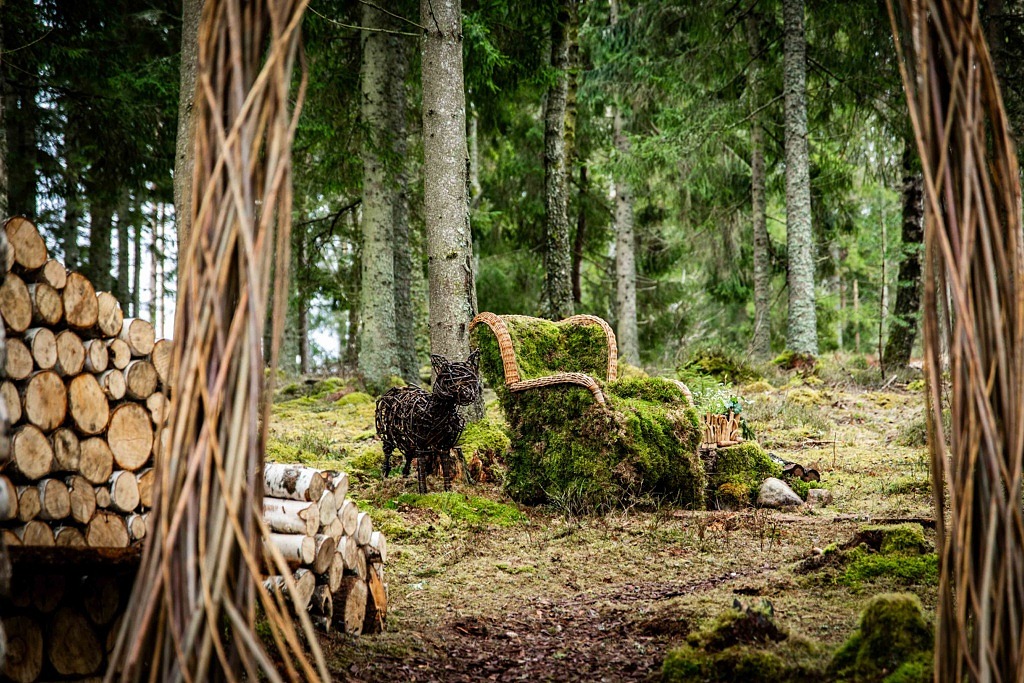
Grandpa's glade (Morfars glänta) is located in Ätran, on the stretch between the bathing area and the windbreak at Eseredssjön, an area that is already appreciated by hikers, school classes, locals and visitors. (more…)
Morups Tånge

Morups Tånge

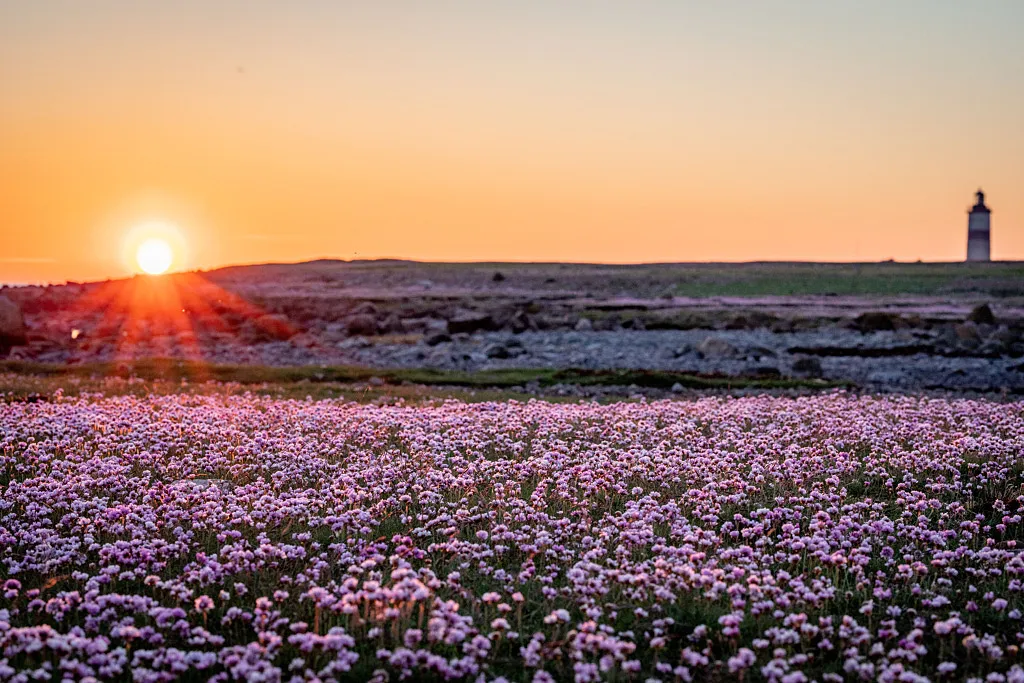
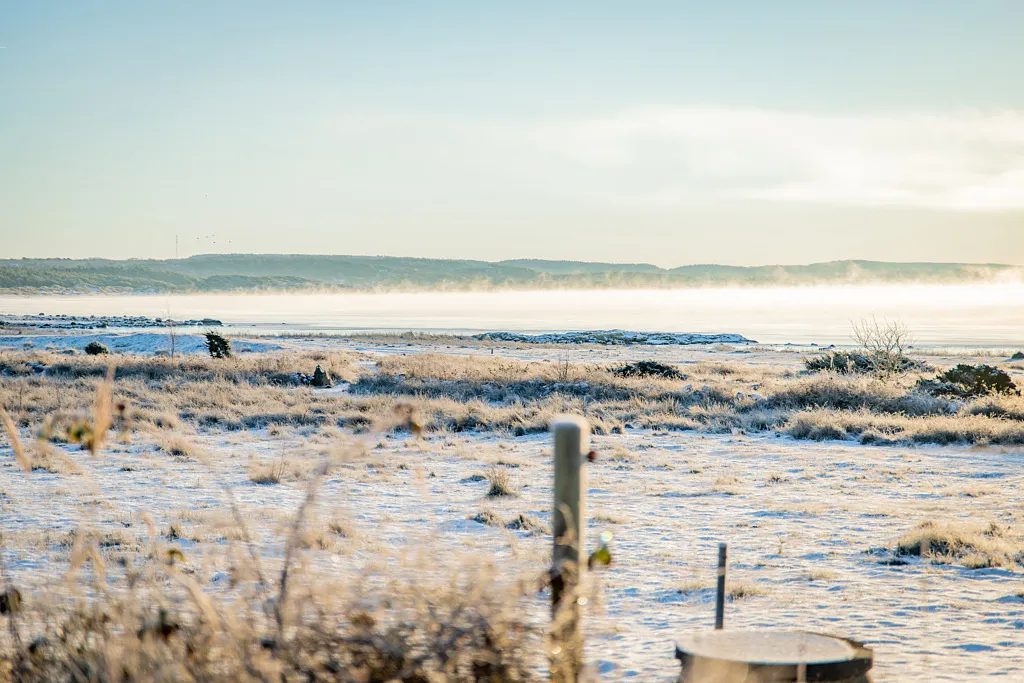
Morups Tånge is a beautiful nature reserve with an abundance of wildlife just south of Glommen. Both birds and people come here to relax and enjoy the peaceful nature. Take a break and enjoy your front row seat to the ocean view. And don’t forget your binoculars! Welcome You get to Morups Tånge through a series of winding roads. The majestic lighthouse can be seen from far away. Before you arrive at the parking area, you will have to stop and open the gate. This is because there are horses and cows that graze and roam freely in the beach meadows to keep the landscape open and accessible. The nature reserve is one of the most beautiful bird habitats in Sweden. It is an important resting place for many of the country’s migratory birds, and approximately 280 different species have been spotted here. A spellbinding experience by the sea Morups Tånge is a lovely place to go for an excursion no matter the time of year, where you can go exploring around the lighthouse and over the heaths. There is signage that indicate areas that are off-limits to keep humans from disturbing the local bird life. In the summer, you can enjoy the breathtaking view of the sunshine on the rippling ocean waves and stunning sunsets. In the winter, you can experience nature’s spectacle accompanied by salty winds and the smell of seaweed. About the lighthouse The lighthouse at Morups Tånge was built in 1841 and is 27 metres tall. In the 1930s, the lighthouse was modernised with electricity. The lighthouse is still in operation to this day, shining its light across the Kattegat strait, but has been unmanned since 1962. If you visit the reservation during the International Lighthouse Day in August, you can go all the way up inside the lighthouse and enjoy the view of the surrounding area. It is usually also open to visitors on a few occasions over the summer. You can follow the life of the lighthouse on Twitter and Instagram on @TngeFyr
Sumpafallen

Sumpafallen

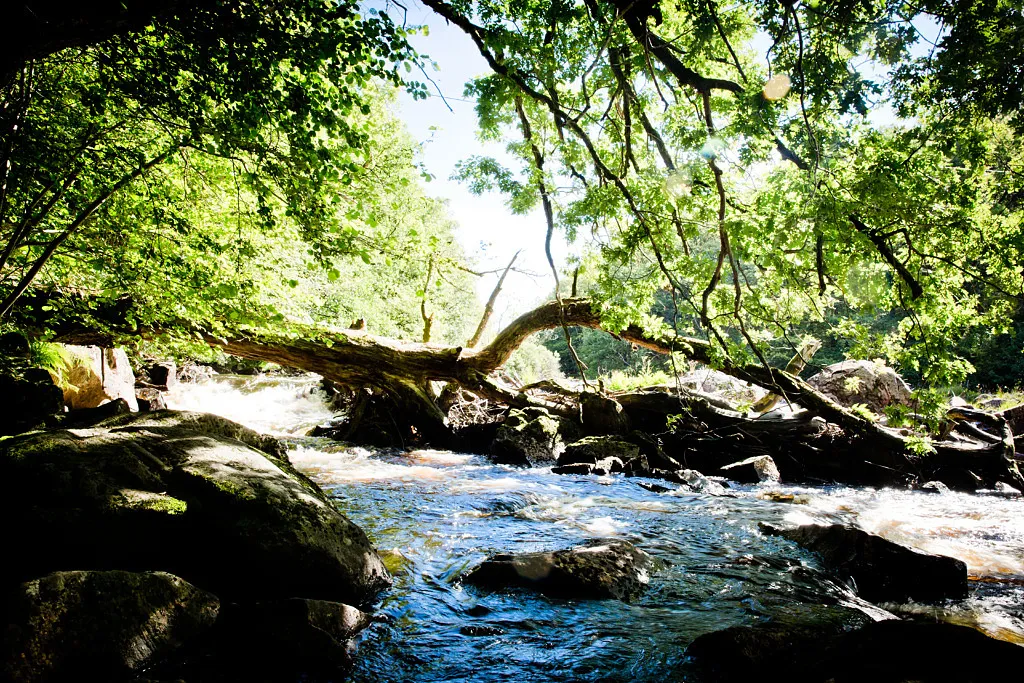
At Sumpafallen, you can stroll along the rapids or into the beautiful forests. The nature reserve is an extremely popular destination for excursions. There are plenty of picnic tables here, so be sure to pack a lunch and enjoy a quiet moment in peaceful scenic surroundings. Welcome A narrow dirt road takes you directly to the nature reserve’s parking area. There are plenty of tables and benches here if you want to start your excursion with a picnic. Please be sure to close the gate again when you enter. There are grazing animals in the reserve whose role is to keep the landscape open, which also benefits many other species. Follow the path down the slope, and it won’t be long until you can hear the roaring of the rapids. The rapids are part of the Högvadsån river, which is known for its clear waters and salmon that can be seen leaping out of the water. Beautiful nature The ravine is surrounded by pastureland and oak plantations. It can almost feel like a magical place in the spring when the white wood anemones bloom and cover the fields like winter snow and a soft fog hangs over the water. The river is home to salmon as well as trout and freshwater pearl mussel. In the forest, you will hear the telltale birdsong of species such as willow warbler and finch every year, while the dipper keeps to the rocks out in the water. A lot to discover At the rapids, you can have a picnic on one of the many tables and benches. There is even a barbecue area that you can use. There are also some interesting ruins of the Sumpa mill, which is mentioned in historical accounts as far back as the end of the 18th century. An approximately 2 km hiking trail snakes along Högvadsån and eventually follows the road back to the parking lot.
Vallarnas Friluftsområde

Vallarnas Friluftsområde

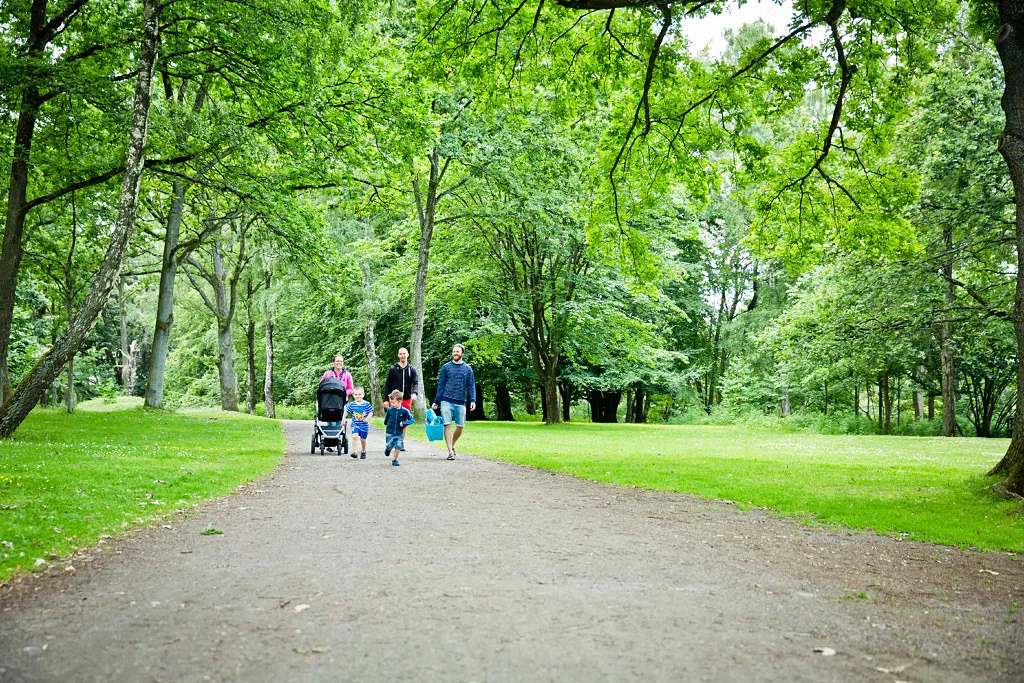
Vallarna is a beautiful and living park with lots of activities to partake in. The 270,000 m² area is only a short walk away from the town centre across Tullbron. Falkenberg’s biggest park At the park, you can walk along the Ätran river and take in the beautiful nature. Magnificent rhododendrons begin to bloom here in the early summer. There are also deciduous and pine trees as well as several introduced exotic species such as red oak, goldenrain tree, copper beech and yellow buckeye. There is an abundance of wildlife in and around Vallarna. A lot of ducks and other water birds thrive here. You may also come across a variety a small wild animals, including squirrels and rabbits. Something for everyone The Ätran river has salmon, which attracts sport fishermen and spectators far and wide. Vallarna also has a mini-zoo with chickens, sheep, goats and pigs. You can spend a while at the playground, skate park, adventure park, outdoor gym or the parkour park. History Long ago, Vallarna was an almost desolate area without trees and only a smattering of bushes along the Ätran river. The area was used as grazing land for the Herting farm, and there was also a clay pit and brickworks here. In 1861, however, a doctor by the name of Ehrengranat laid down the walkway along the river that is now known as the Doctor’s Promenade. Eventually, the brickyard shut down (1877) and became a cemetery site. Spruce trees were planted throughout the area near the end of the 19th century, but struggled in the sandy soil and were eventually replaced with pine trees. The park begins to grow In 1916, the park architect Rudolf Abelin was commissioned by the association Småfåglarnas Vänner to establish a town park in the northern part of the area, which was still a grassland without trees. Walkways, arbours and open spaces were established. Birch and mountain pine were also planted in groves, creating a link to the pine forest. It was around this time that people were gaining an increasing appreciation for maintaining one’s health, and a lot of the focus in this regard was on fresh air, parks and sports. The town had bought the field by Vallarna from the Herting farm and chose to build a school here to ensure that the children would have access to nature and fresh air. In 1936, Falkenberg’s sports hall was built in the area too, and it has been extensively used for sports and exercise ever since.
Ätraforsdammen

Ätraforsdammen

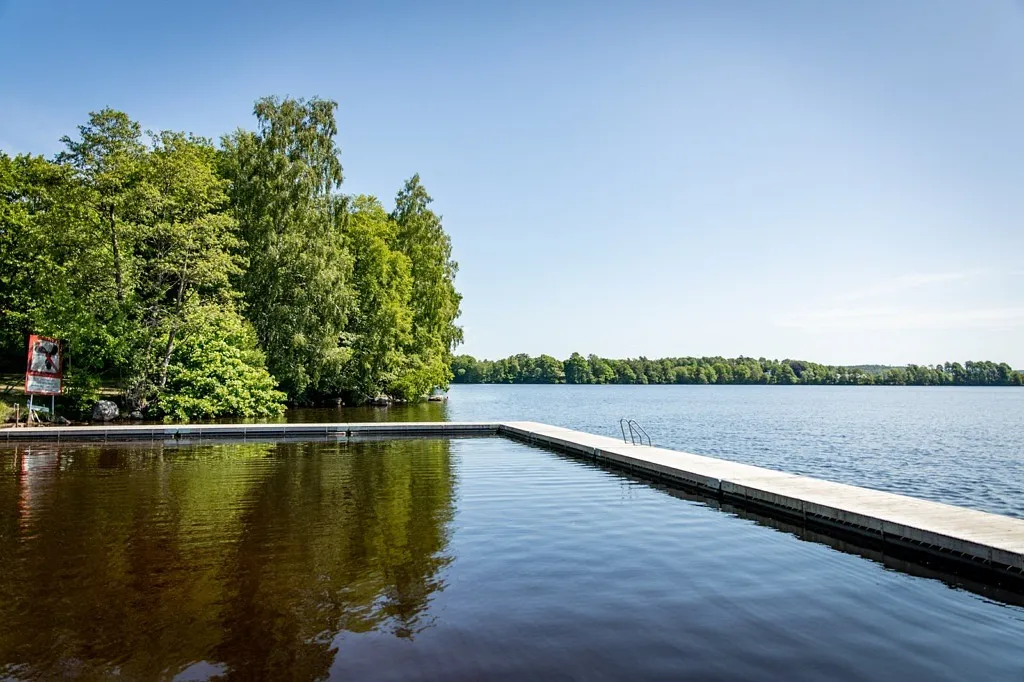
About the swim spot A place worth spending the whole day, so be sure to bring a packed lunch! There are lovely green areas to lie in the sun and for the children to play. By the big area near the swim spot, there is space for activities as well as relaxation. With good barbecue areas and a beach volleyball net, it’s the perfect spot to unwind on a wonderful summer day in good company. The area has a bathing jetty, restroom and rubbish bins, as well as swings for the children. Ätraforsdammen provides water to the Ätrafors power plant. The Ätran river’s original furrow with waterfalls and rapids has been dammed off, and the water has instead been routed into a canal leading to the power plant. The water basin holds four million cubic metres of water and covers an area of approximately two square kilometres. You are allowed to fish freely in the whole dammed area, but fishing by the floodgates is prohibited. Find here!
Grimsholmen

Grimsholmen

Located along the scenic coastal road south of Falkenberg, Grimsholmen is a must-see. At Grimsholmen, you can roam freely in nature, rest on the cliffs or go swimming in the bays. Welcome The open landscape by Grimsholmen consists of beach meadows, heaths, cliffs and pine forests. There are grazing cows and sheep in the area that make sure that is remains accessible. Here, you can go exploring to your heart’s content or take a stroll along the dirt road leading down to the sea. Boathouses, tools and a little harbour point to indications that people fished here. The area is also home to a number of Bronze Age relics such as cairns and stone circles. Enjoy the sea The reservation has plenty of cliffs, but also a number of small sandy beaches that are great swim spots and fun for the children to explore. You may even find a beach that you have all to yourself. There are tables and benches at the parking lot, but we recommend that you bring your packed lunch with you to one of the taller points in the nature reserve where you will have a far better view. You may even be able to make out Marsten, a collection of barren islands far off the coast. Nature A large variety of species of birds thrive in this nature reserve and look for food in the shallow bays south of the headland. It also has the typical beach meadow flora one might expect, along with a handful of rarer species.
Smörkullen

Smörkullen

Welcome Climbing Smörkullen is a fun adventure for grown-ups as well as children. When you make it to its peak, you will find yourself 52 metres above sea level and with a magnificent view of Falkenberg. The Smörkullen nature reserve is a lovely excursion point for the whole family thanks to its ideal combination of nature and fun experiences. There is a parking lot just by the road. Head to the top There are three paths leading up the hill. The one right by the parking lot is the steepest, while the other two are less challenging. The paths are well-maintained and easy to follow. Children should have no problem making it to the top - in fact, they will most likely find it exciting, especially the last stretch where you have to climb wooden ladders. Once you make it to the top, you enjoy the packed lunch you hopefully brought as well as the amazing view. A fascinating history Smörkullen was once part of a chain of beacon hills along the coast. The signal fires served as a kind of alarm system that could quickly alert the entire countryside to encroaching danger, such as raiders. It has likely also been a site for the mythical practice of ättestupa, where elderly people were said to have thrown - or been thrown - to their death, as well as a sacrificial site. Additionally, an amazing discovery was made on the top of the hill in 1859, when a golden bowl from the Bronze Age was unearthed. At Smörkullen, you can also find old Nordic rock carvings known as bowl hollows. The bowl hollows are where Smörkullen gets its name from - Butter Hill in English - as it was once believed that people once sacrificed fat in the bowls.
Ljungsjön

Ljungsjön

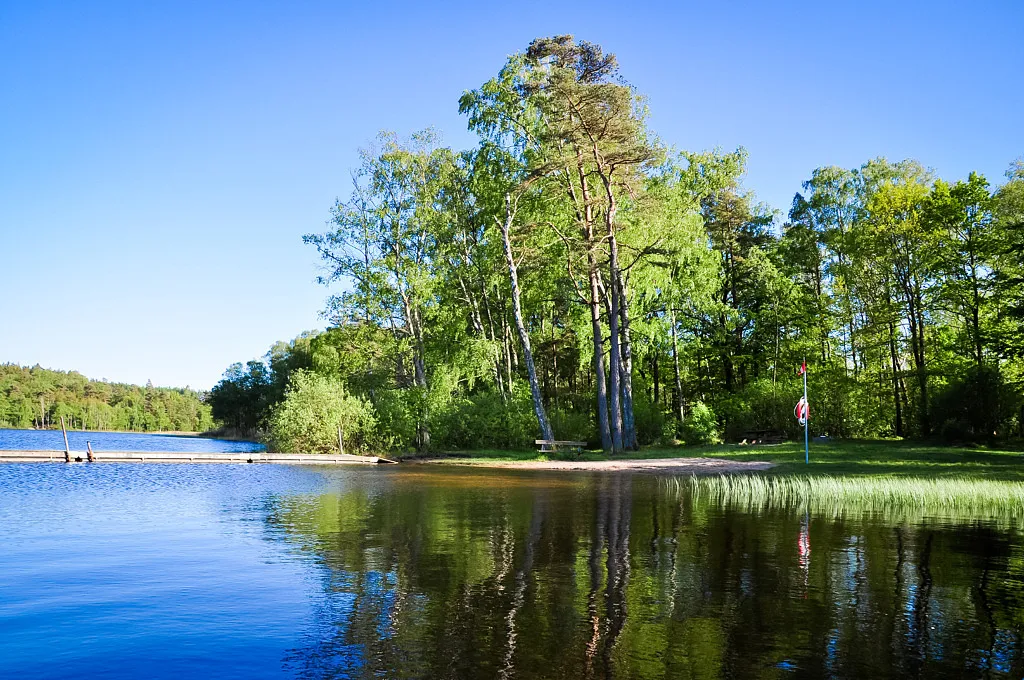
Ljungsjön is a real gem with its beautiful swimming spot and barbeque opportunities. About the swim spot It is located a short journey from Ljungby, east of Falkenberg. The swim spot has a bathing jetty, restroom and rubbish bins. There is also a barbecue area and plenty of tables and benches.
Yngeredsforsen - Döda Fallet

Yngeredsforsen - Döda Fallet

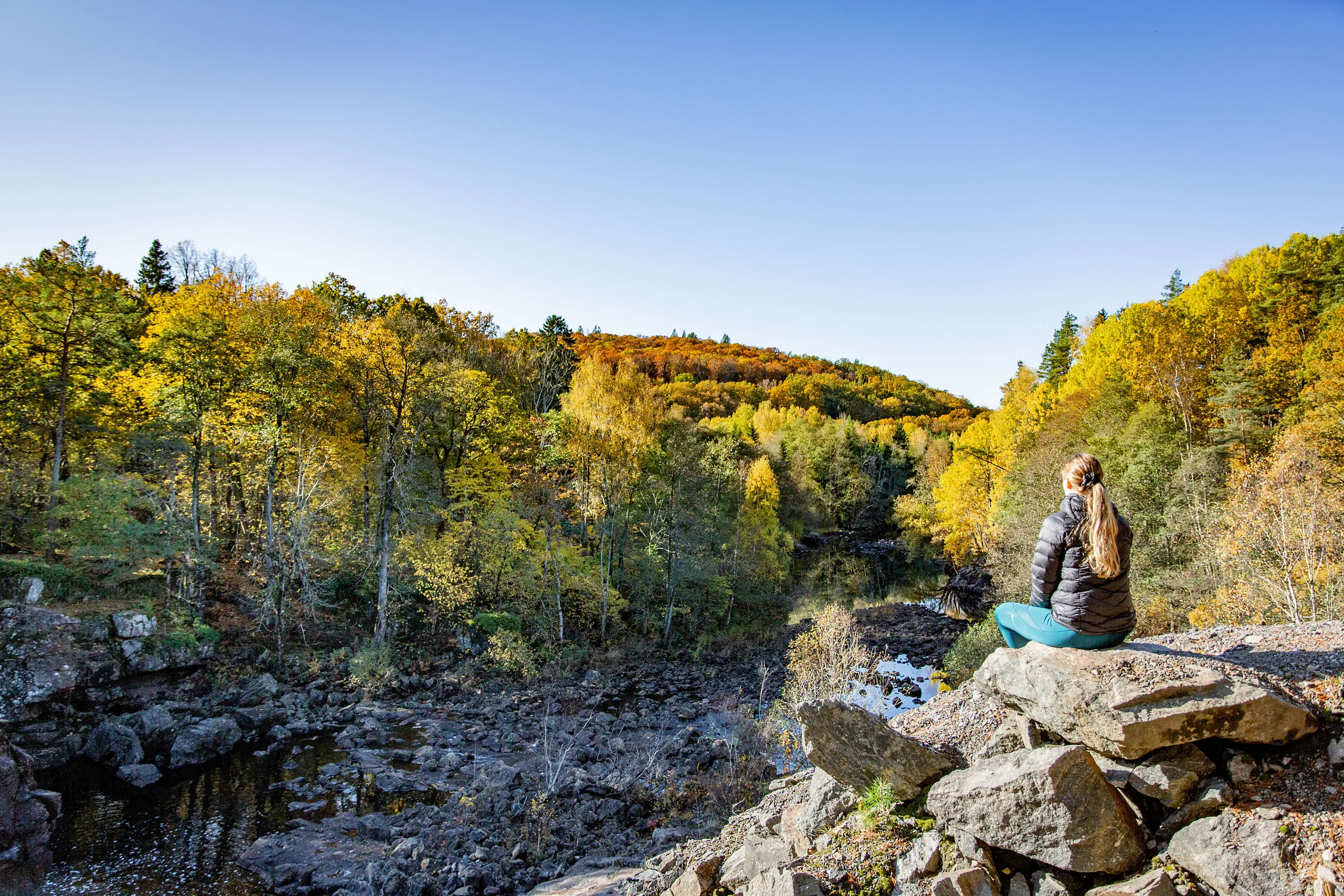
Döda Fallet (Dead fall) is a fascinating destination. Located in the middle of beautiful nature, there is plenty to discover and learn here about the river Ätran and the power plant chapter of its history. Welcome Aside from taking you straight to Yngeredsforsen, the road between Askome and Gällared is the most beautiful in Halland. Here, you can stroll down an exciting cultural trail that takes you to a number of sights by the ancient rapids. For a long time, the communities of the Ätra valley have exploited the power of the river. Traces of these communities can still be found by Yngeredsforsen. The signs guide you around to raft and mill corrugations, various ruins and the high dam levees. History The businessman Mauritz Hansson purchased the area in 1899 and had great plans for the rapids. He envisaged the creation of an industrialised community with a pump mill and power plant. However, financial constraints meant that it was only possible to build the power plant, which was completed in 1907. Wallenberg then took over ownership of the company and coupled the power plant with his paper mill in Mölndal. Döda Fallet (Dead Falls) gets its name A new power plant was constructed a bit upstream of Boaforsen in the 1960s. In order to get the best turbine effect, the water was routed down a tunnel that transports it a bit downstream. In connection with this, the stretch of water by the old power plant was drained, which is how the name Döda Fallet (Dead Falls) came about. The foundations and ruins from the old power plant still remain. Exploring these can be a fun experience, but be sure to keep one eye on the children as the area has a few slippery cliffs and deep gorges. Enjoy the nature There is a lot to explore here, so be sure to bring a packed lunch. There are tables and benches scattered around the area, as well as barbecue sites. If you visit the area after a period with a lot of rainfall, you may find the waterfall is as active and roaring as it once was. This happens when water is released from the dam to relieve the pressure that is created in connection with high water levels.